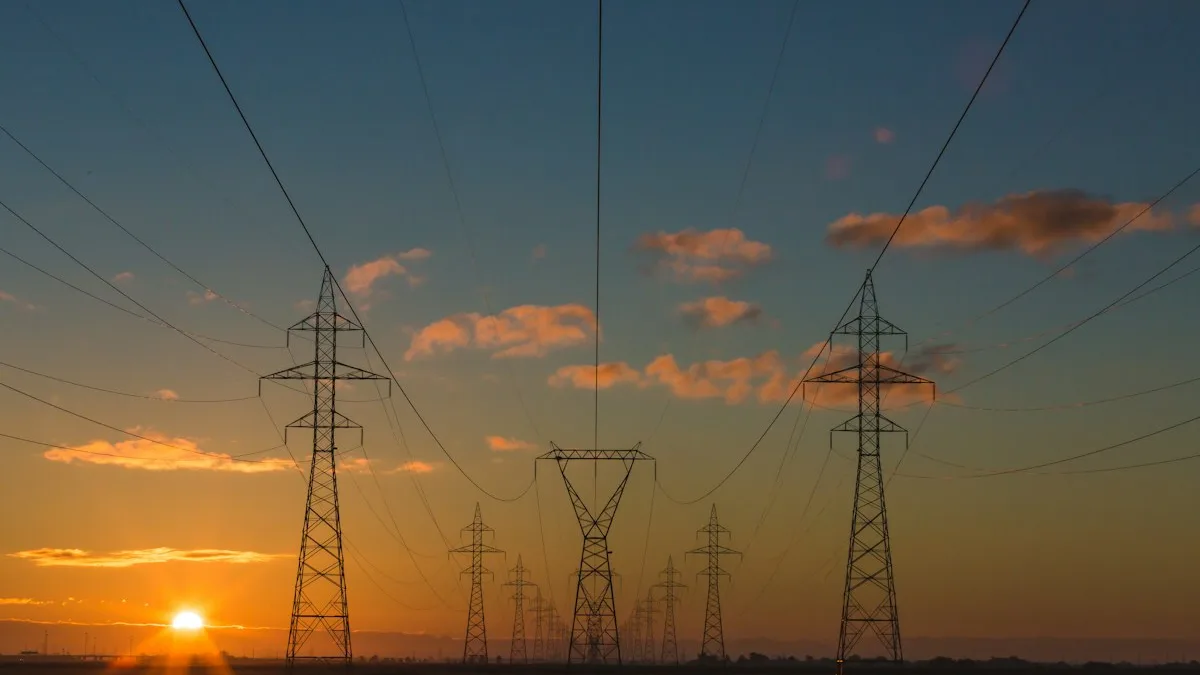
Moving decisively to solve renewable energy intermittency ahead of peak industrial power demand curves, the Union Cabinet approved the ₹38,500-crore National Critical Grid and Pumped-Hydro Energy Storage Mission. Unveiled following late-evening deliberations in New Delhi and topping Today's News, the five-year capital programme combines viability-gap grants for 18 gigawatts of closed-loop off-river pumped-storage hydropower with three ultra-high-capacity interstate transmission corridors.
Senior power-sector planners briefing our India bureau explained that while national solar installations now routinely generate midday surpluses that depress spot exchange tariffs near zero, evening residential and manufacturing load spikes between 6:30 PM and 10:30 PM still force regional load dispatchers to ramp coal-fired units at steep thermal stress.
Closed-Loop Twin Reservoirs and Variable-Speed Turbines
To bridge that diurnal gap without damming ecologically sensitive Himalayan or Western Ghats rivers, 85 percent of the sanctioned storage capacity targets off-river closed-loop sites across rocky escarpments and exhausted mine pits in Andhra Pradesh, Maharashtra, Karnataka, Rajasthan, and Odisha. During sunny afternoon hours, reversible pump-turbines use cheap solar electricity to lift water into an elevated upper basin, releasing it back down penstocks after sunset to deliver six to ten hours of synchronous, inertia-rich grid power.
Mission procurement rules provide tiered capital support for domestic manufacturing of variable-speed reversible Francis pump-turbines capable of adjusting megawatt draw within seconds to stabilize grid frequency around 50.00 hertz.
HVDC Superhighways and Tariff Stability for Discoms
Alongside storage reservoirs, ₹16,200 crore of the Cabinet package funds ±800-kilovolt High-Voltage Direct-Current converter terminals and multi-circuit lines connecting renewable energy parks in Kutch, Barmer, and Tuticorin directly to northern and central industrial clusters with minimal line losses. Dynamic synchronous condensers and AI-assisted wide-area phasor monitors will be installed across 64 critical substations to prevent cascading voltage sags.
State distribution utilities signing 25-year round-the-clock firm renewable power purchase agreements backed by mission storage assets will benefit from a complete waiver of interstate transmission charges through December 2030, locking in predictable sub-₹4.65 per unit delivered peak power while accelerating domestic heavy electrical order books.
| Assessment Dimension | Verified Filing / Operational Benchmark |
|---|---|
| Core Coverage Domain | India & Governance — National Grid Mission |
| Headline Quantitative Anchor | ₹38,500-Crore (Union Cabinet cleared a ₹38,500-crore outlay spanning FY2027–FY2031 to build 18 GW of closed-loop pumped-hydro storage and HVDC links.) |
| Primary Institutional Authority | Cabinet Committee on Economic Affairs (CCEA), Press Information Bureau (PIB) & Ministry of Power / MNRE Official Notifications |
| Operational Mechanism | Off-river twin-reservoir storage complexes will absorb surplus midday solar generation and dispatch eight hours of evening peak power. |
| Safeguards & Downstream Impact | Three new ±800 kV high-voltage direct-current transmission corridors will evacuate desert and coastal wind-solar hybrid output to industrial load centres. |
Institutional Mandate, Statutory Architecture and Inter-Ministerial Execution
Placing the development within India’s broader administrative and federal trajectory, senior policy analysts tracking India & Governance emphasize that execution discipline now hinges on synchronized clearances between central ministries, state nodal agencies, and statutory regulators. Anchored by Cabinet Committee on Economic Affairs (CCEA), Press Information Bureau (PIB) & Ministry of Power / MNRE Official Notifications around the benchmark parameter of ₹38,500-Crore, the framework moves beyond declaratory announcements by embedding milestone-linked accountability, digital audit trails, and clear jurisdictional boundaries.
In practical governance terms, recent reforms discussed across our Daily Current Affairs desk show why detailed subordinate rules and procurement templates matter as much as headline sanctions. By codifying operational guardrails—specifically that Three new ±800 kV high-voltage direct-current transmission corridors will evacuate desert and coastal wind-solar hybrid output to industrial load centres.—administrators reduce litigation friction, prevent cost escalations across multi-year implementation cycles, and protect public-interest safeguards at the district and state-secretariat levels.

Fiscal Linkages, Compliance Benchmarks and What Citizens Should Watch Next
Downstream monitoring over the coming quarters will focus on measurable public-delivery outcomes rather than gross budgetary allocations alone. Notably, official records highlight a decisive secondary dimension: Interstate transmission charges stand waived for commissioned pumped-storage plants entering commercial operation before December 2030. Independent researchers reviewing Explainers & DataPulse dossiers point out that pairing transparent telemetry with statutory grievance channels strengthens citizen trust while giving parliamentary committees and audit authorities objective quarterly baselines.
Looking ahead, nodal departments are scheduled to publish periodic compliance updates reconciling physical progress against sanctioned milestones. Stakeholders, legal practitioners, and civil-society observers following India News Today should watch upcoming inter-state review meetings, gazetted operational guidelines, and third-party performance audits that will determine how rapidly these institutional commitments translate into durable on-ground capacity.
Key Implementation Checklist, Stakeholder Impact and Verification Trail
Synthesizing the primary documentary record filed under Cabinet Committee on Economic Affairs (CCEA), Press Information Bureau (PIB) & Ministry of Power / MNRE Official Notifications, institutional reviewers identify three interconnected execution pillars that separate durable reform from short-term announcements around National Grid Mission. First, anchoring capital, operational, or curatorial allocations around ₹38,500-Crore establishes an auditable baseline—specifically reinforcing the core mandate that Union Cabinet cleared a ₹38,500-crore outlay spanning FY2027–FY2031 to build 18 GW of closed-loop pumped-hydro storage and HVDC links. Second, technical protocols governing day-to-day rollout require participating agencies and operators to verify that Off-river twin-reservoir storage complexes will absorb surplus midday solar generation and dispatch eight hours of evening peak power.
For citizens, enterprise decision-makers, and policy researchers consulting CNN-News18’s Newsroom Topics Directory and Multi-Year Archive, tracking how central notifications interface with state-level or last-mile execution remains essential. Historical precedent across Indian infrastructure, regulatory, judicial, scientific, and market cycles shows that early transparency in procurement, telemetry reporting, and public grievance redressal substantially accelerates adoption while compressing implementation risk across subsequent fiscal quarters.